Garden & potting
Unsealed terracotta, aged zinc and oiled hardwood for the verandah, the potting bench and the beds beyond them. Nothing here is meant to stay indoors, and nothing here stays new-looking for long.
See the twelveBy season
Autumn into winter
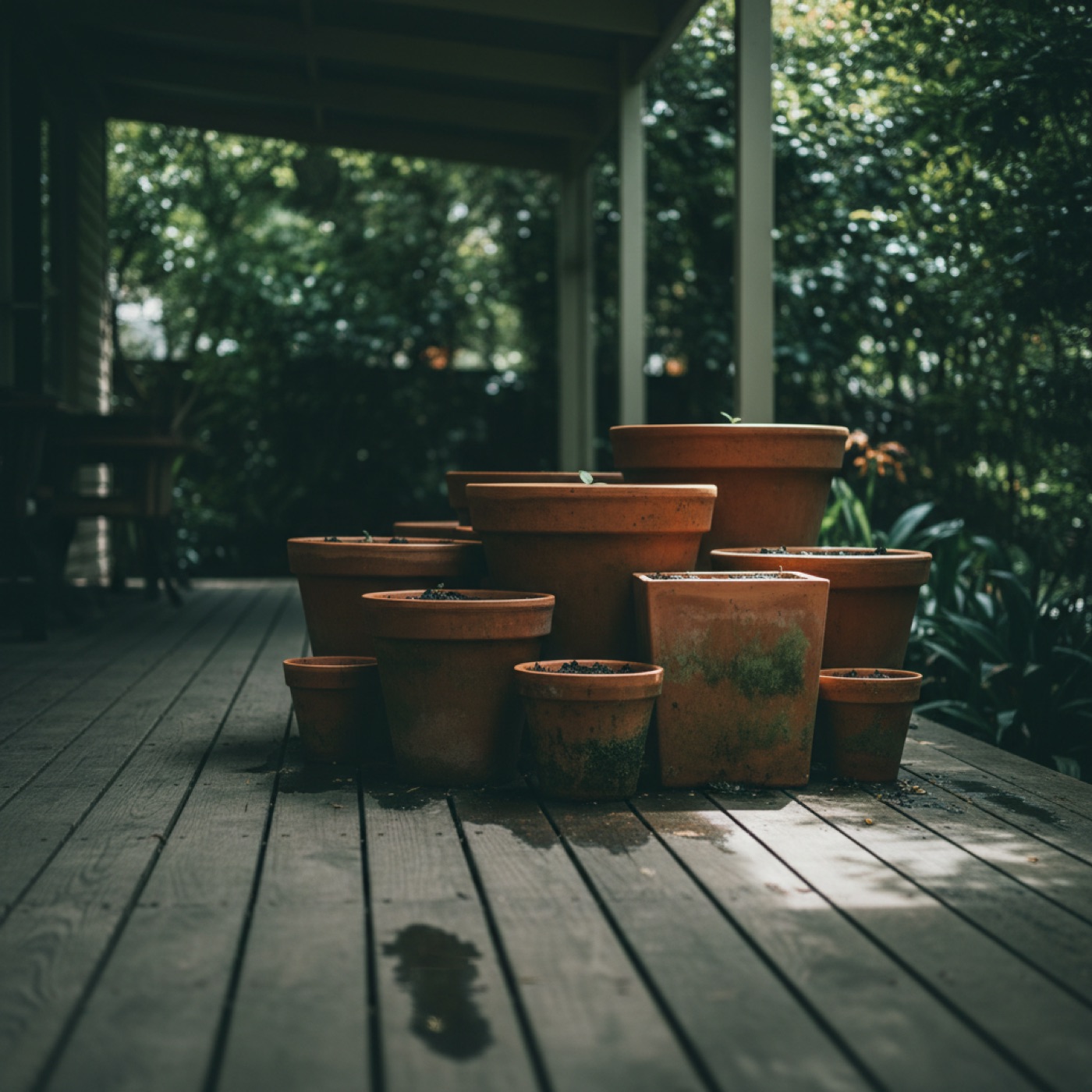
Soil is still warm and the air is not, so roots settle before growth starts pulling. Unsealed terracotta dries a wet winter mix faster than glazed or plastic, which is the whole argument for it. If frost is a real risk where you are, lift pots off paving onto feet or a stand so water never sits underneath.
Late winter into spring
Small terracotta and glass are for this stretch. Seedling pots dry evenly and take a lift-and-check without collapsing; glass vessels let you watch roots strike rather than guess at them. Pot up as soon as roots circle the base — a seedling held too long in a small pot never quite catches up.
Summer
Terracotta loses moisture through the wall as well as the surface, so a pot in full western sun can want water twice a day in February. That porosity is not a fault; it is what keeps roots from drowning the rest of the year. Group pots, mulch the top, and move the smallest into afternoon shade.
The bench in August. Everything on it is made to be left out in the weather, and most of it looks better for having been.
Twelve pieces · $19 to $189
$18 anywhere in Australia, dispatched in 3–5 business days from Perth. Terracotta travels double-boxed with straw board between pieces.
If something arrives broken or turns out faulty, send a photo within 7 days and we replace or refund it. This is not a change-of-mind window.
Unsealed terracotta varies in colour, and it will bloom white with mineral salts within a season. Neither is a fault, and neither is reversible.
It can. Water absorbed into the clay wall expands when it freezes, and a saturated pot that freezes hard will flake or split. Our thick-walled pots are listed as frost-hardy to about −5 °C when they are draining freely; the thin-walled seedling pots and the hanging planter are not frost-hardy and say so on the listing. The practical fix in a cold garden is drainage — a pot that never sits in water rarely breaks.
Mineral salts from your water and your potting mix moving out through the clay. It is called bloom, it starts within a season, and it is the reason people buy unsealed terracotta in the first place. A stiff dry brush takes it back if you want it back. Vinegar strips it faster and lightens the clay unevenly, so we would leave it.
Yes, every one of them, and the hole diameter is on the listing. We do not sell an undrilled planter — a sealed base is how roots rot. The saucers are sold separately and are not drilled, so tip them out after heavy rain rather than letting a pot stand in water.
Zinc does not rust the way steel does; it dulls to a soft grey and develops a chalky patina, and the pieces we sell arrive part-way there already. Left in weather it keeps going, which is the point. Where a piece has a steel handle or fitting we say so, and that fitting will eventually mark — keep the can under cover between waterings if that bothers you.
Oil it once or twice a year with any food-safe or exterior hardwood oil, and let it dry standing rather than lying flat. Left unoiled outdoors it will silver, which some people prefer. What it will not tolerate is sitting wet on soil — the potting tray and the trug both want to be tipped out and stood on edge after a session.
Dispatch is 3–5 business days from Perth. After that it is standard parcel post, which usually runs 2–4 business days within WA and 5–9 to the east coast, longer to regional and remote addresses. Heavy terracotta is not sent express.
Stacked out of the rain, waiting on the next round of repotting.